| What it treats | Large, recent DVT in the thigh or pelvic veins with severe symptoms |
|---|---|
| Anaesthesia | Local anaesthesia with sedation |
| Entry point | Needle puncture in a vein behind the knee or in the neck |
| Time taken | Usually 1–3 hours; thrombolysis may continue for some hours |
| Hospital stay | Usually 2–4 days |
| Back to routine | Usually 1–2 weeks |
Who is it for?
People with deep vein thrombosis who have:
- a large, recent clot in the thigh (femoral) or pelvic (iliac) veins
- severe swelling or pain despite blood thinners
- a threatened leg with very poor circulation
How is it done?
- You lie face down or on your back. The skin over a vein behind the knee or in the neck is numbed and sedation is given.
- A thin tube is passed into the vein under ultrasound guidance, and dye shows the clot on X-ray.
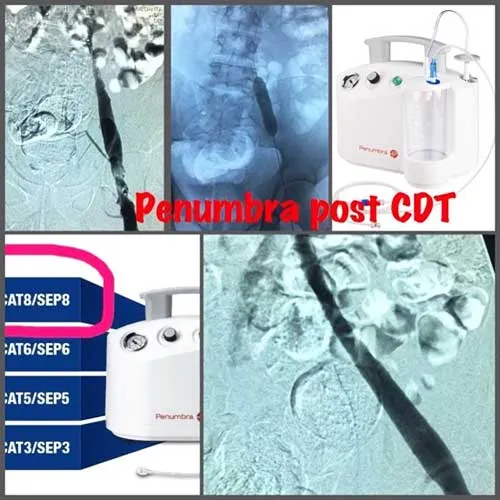
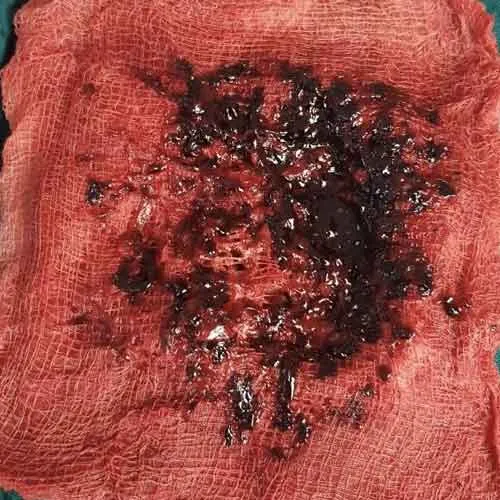
- A device breaks up and sucks out the clot, and/or clot-dissolving medicine is delivered directly into it.
- If a narrowing is found underneath, it may be opened with a balloon and stent (venous stenting).
- The tube is removed and a dressing is applied.
How do clot-dissolving medicine and thrombectomy devices work?
- Catheter-directed thrombolysis (CDT): a special tube with many small side holes is placed inside the clot. Clot-dissolving medicine (a thrombolytic, or “clot buster”) is given through it, straight into the clot. Because these medicines can cause bleeding, they are given in hospital with close monitoring.
- Mechanical thrombectomy: special catheters break up the clot and remove all or part of it, without open surgery.
- Pharmaco-mechanical thrombolysis (PMT): both are combined.
Unlike blood thinners, these treatments are designed to remove or dissolve the clot. They restore blood flow quickly and may help prevent damage to the valves in the vein, which is what causes post-thrombotic syndrome. Timing matters: the clot gets harder with each day, so treatment works best when started early.
What is recovery like?
You are monitored in hospital, often for a few days. Swelling usually improves over days. You’ll continue blood thinners and wear stockings as advised. Follow-up Doppler scans check that the vein stays open.
Clot removal or blood thinners alone?
| Blood thinners alone | Clot removal + blood thinners | |
|---|---|---|
| Used for | Most DVTs | Large, recent thigh or pelvic clots with severe symptoms |
| Clears the clot | Slowly, over weeks to months | Quickly |
| Bleeding risk | Lower | Somewhat higher with clot-dissolving medicine |
What are the risks?
Bleeding (including, rarely, serious bleeding), bruising at the puncture site, reaction to the dye, kidney effects, and rarely clot travelling to the lungs. The doctor will weigh these against the benefits for you.
Common questions about DVT clot removal
Who needs clot removal instead of only blood thinners?
People with large, recent clots in the thigh or pelvic veins with severe swelling or pain, especially younger, active people, and those whose leg circulation is threatened. Most DVTs are treated with blood thinners alone.
How soon should it be done?
It works best for recent clots, usually within about two weeks of symptoms starting.
Will I still need blood thinners?
Yes. Blood thinners are continued for months afterwards to prevent new clots.
What if a narrowing is found after the clot is cleared?
A narrowed vein, such as in May-Thurner syndrome, can be opened with a balloon and stent in the same sitting.
What are the main risks?
Bleeding (mainly with clot-dissolving medicine), bruising at the puncture site, and rarely a piece of clot travelling to the lungs.
Sources
This page follows these patient resources and guidelines:
- Catheter-directed thrombolysis (RadiologyInfo, RSNA & ACR)
- Venous thromboembolic diseases: diagnosis and management (NG158) (NICE guideline, UK)
- DVT (deep vein thrombosis) (NHS)
Related
Deep Vein Thrombosis (DVT)
A blood clot in a deep leg vein, often with sudden swelling and pain.
Learn more →Pulmonary Embolism
A clot that has travelled to the lungs.
Learn more →Venoplasty & Venous Stenting
Opens narrowed or blocked veins, such as in May-Thurner syndrome.
Learn more →
Who performs this procedure
Dr. Virender Sheorain, Director, Peripheral Vascular & Endovascular Sciences, Medanta – The Medicity, Gurugram. Trained at AIIMS New Delhi and in three fellowships in the USA.
Read Dr. Sheorain's profile →This is general information. Please consult the doctor for advice about your condition.