| What it treats | Peripheral artery disease, diabetic foot, gangrene, critical limb ischaemia |
|---|---|
| Anaesthesia | Local anaesthesia; mild sedation if needed |
| Entry point | Needle puncture in the groin, and sometimes the foot or wrist |
| Time taken | Usually 1–3 hours, depending on the blockages |
| Hospital stay | Usually 1–2 days; longer if wound care is needed |
| Back to routine | Usually within a week, depending on wound healing |
What is leg angioplasty?
Leg angioplasty is a procedure that widens a narrowed leg artery from the inside, so more blood reaches the leg and foot. It is done through a needle puncture, without a cut in the leg.
The arteries narrow because of peripheral artery disease (PAD), a build-up of fatty plaque. Angioplasty pushes the plaque against the artery wall with a balloon. It is one of the main techniques of interventional radiology.
Who may need leg angioplasty
Leg angioplasty is for people whose narrowed leg arteries cause problems that walking, medicines and stopping smoking have not fixed. It may be advised for:
- pain on walking that limits daily life (claudication), when a walking programme and medicines have not helped enough (NICE CG147)
- pain in the foot or toes at rest, often at night
- a foot or leg wound that will not heal, often with diabetes (diabetic foot)
- dark or dying skin on the toes (gangrene), to restore blood flow before or alongside wound care
The last three are signs of a threatened foot. Angioplasty can help save the foot in some of these patients. See limb salvage.
What happens, step by step
Leg angioplasty is done in the cath lab, a procedure room with X-ray screens. This is what usually happens.
Before the day
- Tests. A colour Doppler scan and often a CT angiogram show where the arteries are narrowed. Blood tests check your kidneys and blood clotting.
- Medicines. You will be told which medicines to continue or stop, especially blood thinners and diabetes tablets. Do not stop any medicine without advice.
- Fasting. You may be asked not to eat for a few hours before.
On the day
- Numbing. The skin in the groin is numbed with local anaesthesia. You stay awake. Mild sedation may be given if you are anxious.
- Needle puncture. A needle is placed into the artery, usually in the groin. Sometimes the artery at the ankle, foot or wrist is used.
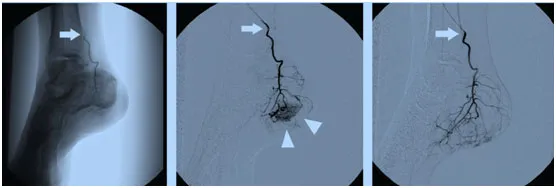
- Angiogram. A thin tube (catheter) is passed into the artery. Contrast dye (a liquid that shows up on X-ray) is injected to show the narrowing on the screen.
- Balloon. A thin wire is passed across the narrowing. A small balloon is moved over the wire and inflated for a short time to widen the artery.
- Stent, if needed. If the artery does not stay open, a stent (a small metal mesh tube) is placed to hold it open.
- Finish. A final picture checks the blood flow. The tube is removed. Pressure, or a small closure device, stops bleeding at the puncture.
How long it takes: often about an hour, longer for several or long blockages. Hospital stay: often the same day, or one night (RadiologyInfo).
Balloon, drug-coated balloon or stent?
Leg angioplasty can use a plain balloon, a drug-coated balloon or a stent. The choice depends on the artery, the length of the narrowing and how it responds.
- Plain balloon. Widens the artery. Nothing is left behind.
- Drug-coated balloon. A balloon covered with a medicine that is pressed into the artery wall, to help stop the artery narrowing again.
- Stent. A small metal mesh tube left inside the artery to hold it open, when the balloon alone is not enough. Some stents also release a medicine.
Angioplasty or bypass surgery?
Angioplasty and bypass are both ways to restore blood flow in a blocked leg artery. Neither is better for everyone. The choice depends on your scans and your overall health.
| Leg angioplasty | Bypass surgery | |
|---|---|---|
| Cut | None; a needle puncture | A cut in the leg, sometimes more than one |
| Anaesthesia | Usually local anaesthesia | Usually general or spinal anaesthesia |
| Hospital stay | Usually same day or one night | Usually several days |
| Recovery | Usually days | Usually weeks |
| Durability | Varies; some arteries narrow again and need another procedure | Varies; may last longer for some long blockages (ESC 2024) |
| Who it suits | Many short and medium blockages; patients with higher surgical risk | Long or complex blockages; when angioplasty is not possible or has failed |
| Who performs it | Interventional radiologist, such as Dr. Sheorain, or vascular surgeon | Vascular surgeon (Dr. Sheorain does not perform bypass) |
In bypass surgery, a vascular surgeon makes a new path for blood around the blockage, using one of your veins or a man-made tube. When bypass is the better choice for you, Dr. Sheorain will say so and refer you to a vascular surgeon.
Recovery and aftercare
Most people can walk around within hours of leg angioplasty, once the puncture site has settled.
- Puncture site. Keep the dressing clean and dry for a day or two. A small bruise is common. Avoid heavy lifting for a few days.
- Walking. Walking is encouraged once you are told it is safe. Regular walking helps long-term results.
- Medicines. You will usually take blood-thinning tablets (antiplatelets) and a statin, as your doctor prescribes. Do not stop them without advice. Stopping them early can let the artery block again.
- Follow-up. A Doppler scan checks the artery at follow-up visits.
- Wounds. If you have a foot wound, keep seeing the wound care team. Better blood flow helps, but the wound still needs care, offloading and sugar control.
- Stop smoking. This is the single most important step to keep the artery open.
Seek help the same day for swelling, growing pain or bleeding at the puncture, or a leg that turns cold, pale or numb. For heavy bleeding that will not stop with pressure, go to the emergency department.
Risks
Leg angioplasty avoids a cut, but like every procedure it carries some risk. Your doctor will explain your own risks before you decide.
- Bruising or bleeding at the puncture site, the most common problem
- Re-narrowing. The artery can narrow again over months or years and may need another procedure.
- Contrast dye and kidneys. The dye can strain the kidneys, especially with diabetes or kidney disease. Your kidney tests are checked first, and fluids help protect them.
- Allergic reaction to the dye, usually mild
- Artery injury or a clot at the treated site, which is rare and is usually treated at the same session
Who it is not right for
Leg angioplasty is not the right choice for everyone. It may not suit:
- people with mild pain on walking that improves with a walking programme and medicines; they usually do not need a procedure
- some very long or complex blockages, where bypass may work better
- people with severe kidney problems, who need special planning to limit the dye
- people who cannot take blood-thinning tablets after a stent
If angioplasty is not right for you, you will be told why and what the other options are.
Videos: peripheral angioplasty

Common questions about peripheral angioplasty
Is leg angioplasty a major surgery?
No. It is done through a needle puncture, usually under local anaesthesia, without opening the leg. Most people go home the same day or the next day.
How long does a leg stent last?
It varies with the artery, the length of the blockage and risk factors such as smoking and diabetes. Some arteries narrow again and need another procedure.
Can I walk after leg angioplasty?
Yes. Walking is usually encouraged once the puncture site has settled, often within hours, and it helps long-term results.
Angioplasty or bypass: which is better?
Neither is better for everyone. Angioplasty is less invasive with faster recovery; bypass may last longer for some long blockages. The choice depends on your scans and overall health.
Will I need medicines after angioplasty?
Yes, usually blood-thinning tablets and a statin, as your doctor prescribes. Do not stop them without advice.
Sources
This page follows these patient resources and guidelines:
- Peripheral arterial disease: diagnosis and management (CG147) (NICE guideline, UK)
- 2024 ESC Guidelines for the management of peripheral arterial and aortic diseases (European Society of Cardiology (Eur Heart J 2024))
- Angioplasty and vascular stenting (RadiologyInfo, RSNA & ACR)
- Angioplasty and stent placement: peripheral arteries (MedlinePlus Medical Encyclopedia)
- Peripheral arterial disease (PAD) (NHS)
Related
Peripheral Artery Disease
Narrowed leg arteries that cause pain when walking.
Learn more →Diabetic Foot
Foot wounds that don't heal because of poor blood flow.
Learn more →Limb Salvage
Treatment to restore blood flow and save the leg where possible.
Learn more →
Who performs this procedure
Dr. Virender Sheorain, Director, Peripheral Vascular & Endovascular Sciences, Medanta – The Medicity, Gurugram. Trained at AIIMS New Delhi and in three fellowships in the USA.
Read Dr. Sheorain's profile →This is general information. Please consult the doctor for advice about your condition.